Reflections on AME Freedom Summer 2026, Sankofa, and the Work Still Ahead
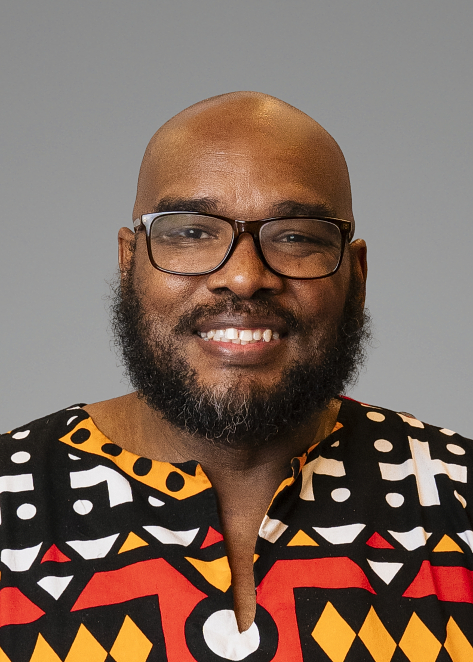
By Rev. Terrance L. Thomas
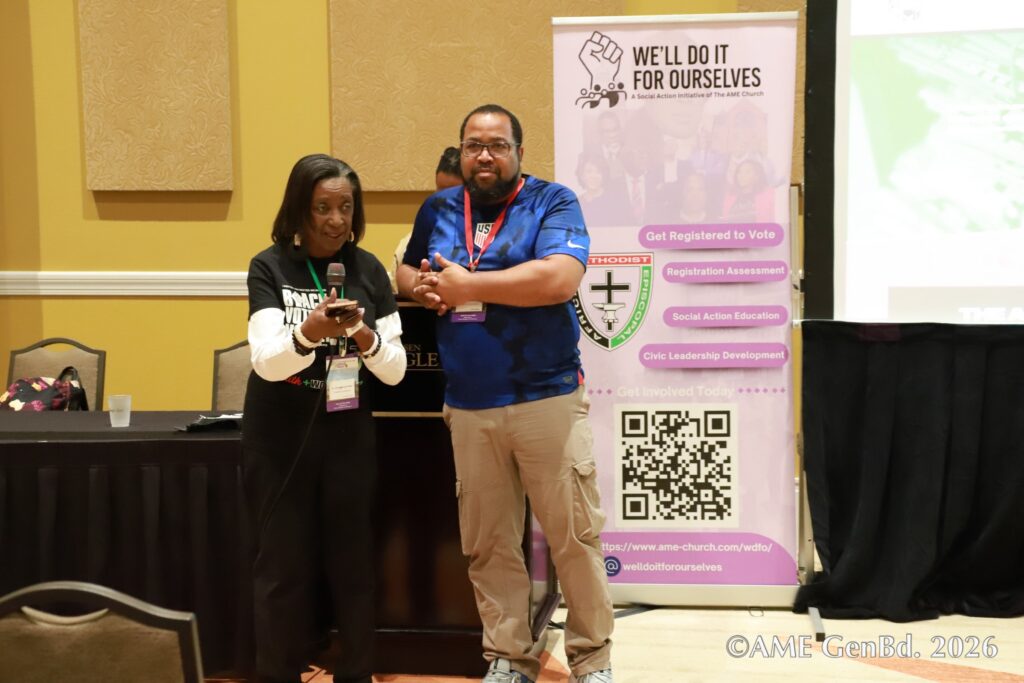
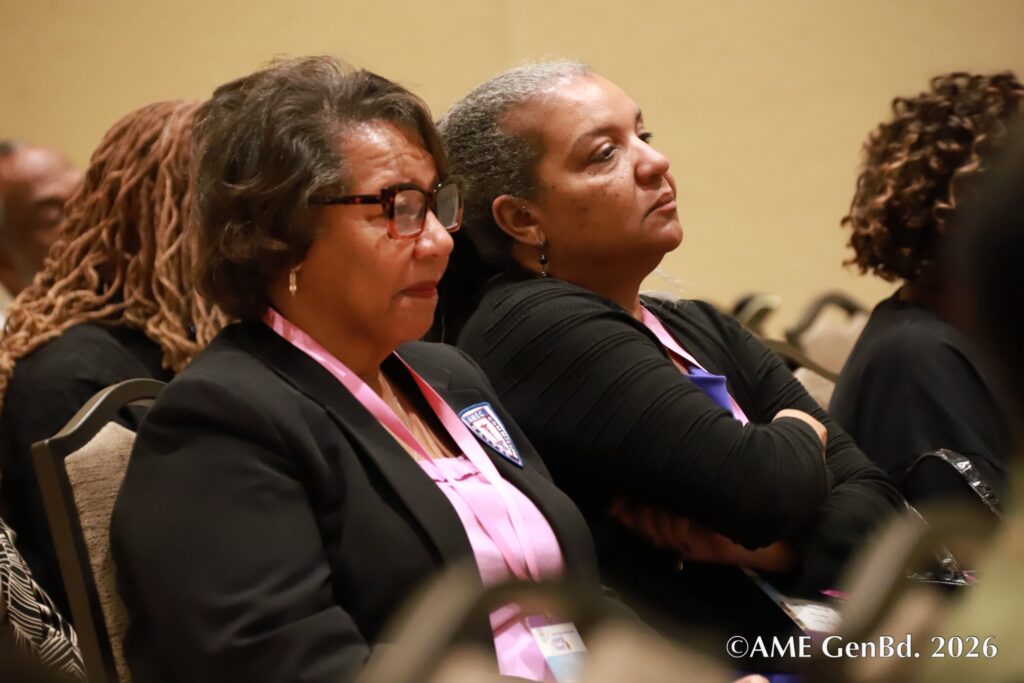
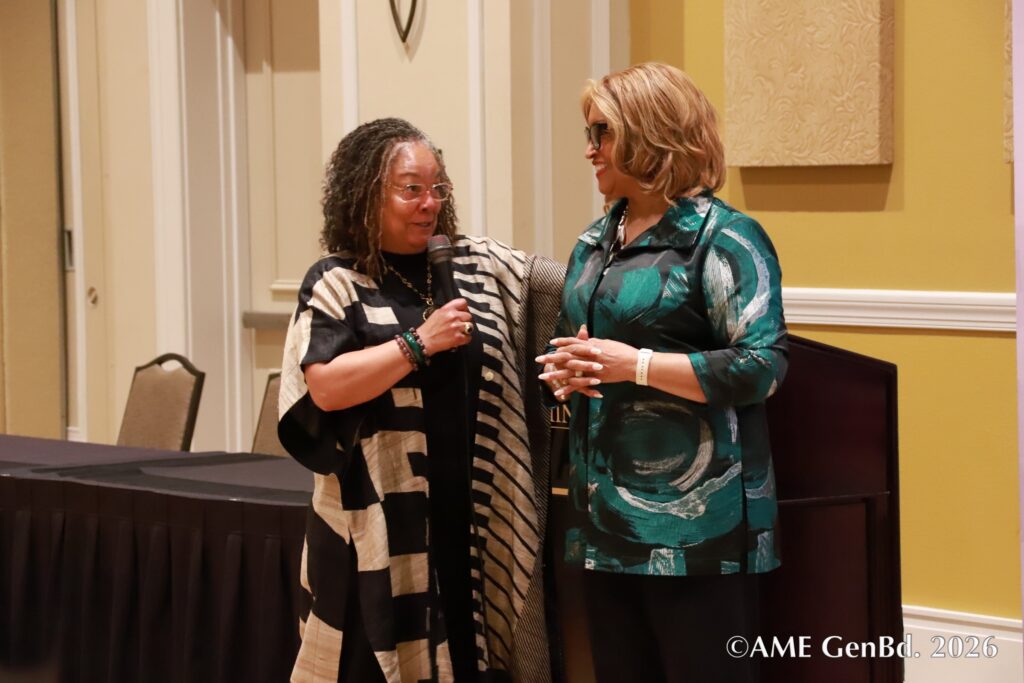
As the United States approaches its 250th anniversary, many people are asking what role the Black Church is called to play in this moment. We are living through renewed battles over voting rights, public memory, economic justice, and the meaning of democracy itself. Some have responded by retreating from public life. Others have embraced forms of politics, increasingly shaped by White Christian Nationalism and a prosperity gospel that baptizes power rather than questions it, that seem disconnected from the liberating tradition of the Black Church. Amid the tensions, many have asked a simple question: Where is the Black Church? At the 2026 General Board Meeting in Orlando, Florida, the African Methodist Episcopal Church offered its answer: The AME Freedom Summer.
When I first opened the curriculum, I felt something I have not felt from a denomination-wide resource in a long time: real pride and unspeakable Black Joy. Here was the AME Commission on Social Justice, under Bishop Francine A. Brookins and Social Action Chair Dr. Jacquelyn DuPont-Walker, doing what our Church has always done at its best, taking the long memory of our people and turning it into a tool a local congregation could actually pick up and use. In fact, if I am being transparent, I flew down to Orlando for the day just to witness this moment, because sometimes you gotta see a thing in real time. I’m so very glad I did.
The curriculum’s central insight is its strongest one. It places the Free African Society of 1787 alongside the Freedom Summer of 1964 and asks us to see them as one continuous act, not two separate stories. Richard Allen and Absalom Jones, pulled from their knees at St. George’s, did not wait for permission to build something new. A century and a half later, young organizers walked into Mississippi. They helped Black Mississippians not only develop a critical consciousness but also inspired a political boldness that helped redefine American politics in the face of murder. Because of Freedom Summer and its voter registration drive, we would later get the Mississippi Freedom Democratic Party, which challenged the hold white racists held within the Democratic Party at the national, state, and local level and changed the DNA of the Democratic Party. With our denomination’s founding and the Freedom Summer of 1964, we refused to wait and built. The AME Church stands in that lineage, and Freedom Summer 2026 is right to claim it.
I plan to use this curriculum at Bethel this summer and beyond. As of this writing, I have already sent it out to my congregation and colleagues. I want to say that plainly before I say anything else, because what follows is not a critique from outside the work. It is a pastor’s notes from inside it, the kind of questions you can only ask once you have committed to doing the thing we call liberation work.
Sankofa Is Not Repetition
The Akan symbol of Sankofa, the bird reaching back for the egg on its own back, has become a kind of shorthand in our Church, and I use it often myself; in fact, it is a part of Bethel Champaign’s logo. But Sankofa does not mean “go back and do what you did before.” It means go back and retrieve what you need, precisely so you can move forward into something the past could not have given you on its own. Sankofa is a discipline of discernment. It is not nostalgia wearing a kente cloth.
I raise this because Freedom Summer 2026 is, by its own design, an eight-week journey through 1619 to the present, organized around four pillars: Civic Education, Voter Registration, Voter Mobilization, and Voter Protection. It is, in its structure, a retelling of the modern Civil Rights Movement’s own theory of change: register, mobilize, and protect. That theory of change is sacred to us and over 60 years old. The world it was built for has changed.
The curriculum’s own foreword tells us this. It names Shelby County v. Holder (2013) and Louisiana v. Callais (2026) as the dismantling of the very legal protections that made the 1965 strategy work in the first place. It calls Callais “the Plessy of our generation.” Then, having named that the ground has shifted beneath the old strategy, the curriculum spends seven of its eight weeks teaching that same strategy again, with a hotline number and a poll chaplain program added at the end.
I do not say this to diminish the work. I believe fully in the work. I know registration matters and mobilization matters. But if the courts have moved the battlefield to redistricting maps and election-board meetings, as the curriculum itself says, then perhaps our energy needs to move there too, not as an appendix, but as a front line. Appendix A mentions monitoring local redistricting in a single bullet point. I wonder whether, as this curriculum continues to develop, that bullet point should become its own week.
Whose Unity Are We Assuming?
The curriculum often speaks of “Black people” and “our community” as a settled, singular thing, the way the movement could in 1964. I am not certain that unity exists in the same form today, if it ever existed, and I think Freedom Summer 2026 would be stronger for naming the question rather than assuming the answer.
Our AME connection is global. We have episcopal districts across Africa and the Caribbean, congregations for whom “Louisiana v. Callais” is not their fight, because the United States Constitution is not their constitution. Our domestic membership includes Black immigrants whose relationship to the ballot is different from the relationship of those of us descended from the enslaved. It includes our LGBTQ members, who helped build the very movement for Black lives this curriculum draws on, and who deserve to be named rather than assumed into a silence. It includes our poor and working-class members, for whom the most pressing daily crisis may be the carceral system, health care, or the rent, not only the franchise.
The curriculum’s own Appendix D, “From Participation to Power,” already knows this. It names Black maternal health, community-based safety, economic justice, housing, and reentry as the substance of what we are actually organizing for. That appendix, tucked at the back of the booklet, may be the truest and most forward-looking page in the whole document. I wonder whether, as this work continues, that agenda should come first, not last, so that our people know what we are building power toward before we ask them to spend a summer building power at all.
The Questions I Am Sitting With
I offer these not as objections but as the kind of questions Sankofa requires us to ask before we go further:
Does a strategy built for an enfranchisement fight answer a threat that has become structural and judicial? What would it look like to give redistricting and election administration the same weight we give voter turnout? How do we account for the generational disconnect that is pushing for more than electoral politics, but also a cultural, spiritual, and economic revolution, and not just system reform?
And let me ask the hard question out loud, especially because this is a denominational initiative: Are we going to invite new voices, younger voices, into the table to formulate this, or are we going to keep using our favorites, our “top” folk, instead of doing what Freedom Summer did: going into the deep parts and finding the freedom fighters?
Does “the Black church” still describe one unified body the way it could in 1964, or does Freedom Summer 2026 need to actively build the unity it currently assumes, across immigrant, queer, poor, and global AME communities, rather than presuming it is already there?
What would change if the Faith-Rooted Black Agenda came before the mobilization rather than after it, so our people knew what they were voting and organizing for, not only what they were defending against?
Going Forward
The Church that turned a walkout into a denomination in 1787 and turned a Bible study into a national curriculum on civic discipleship in 2026 does not need anyone else’s playbook. We have always written our own. I hope that Freedom Summer 2026 is not the finished word but the opening one, that the Commission and our wider Connection will keep doing what this document’s own best instinct already shows us how to do: go back, retrieve what is needed, and build something the moment has not yet seen.
That is the work I am ready to do this summer. I hope to do it alongside all of you. I am excited about Freedom Summer.
Let’s get free y’all.
Rev. Terrance L. Thomas, Senior Pastor, Bethel AME Church, Champaign, Illinois