

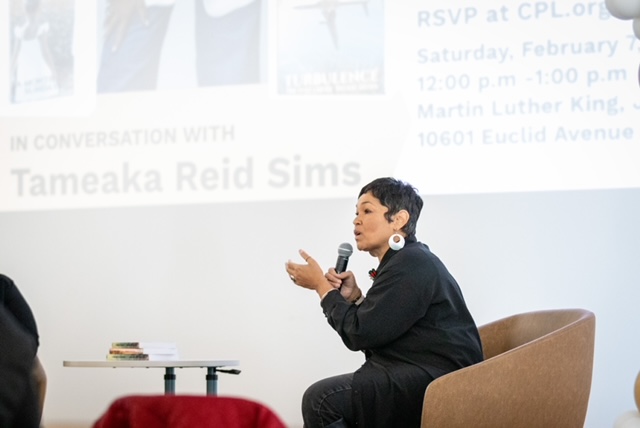
By Rev. Tameaka Reid Sims, 11th Episcopal District
In my family, words have always mattered. For two decades, from 1976 to 1996, my uncle, the Rev. Dr. Robert H. Reid, served as Editor of The Christian Recorder. His pen did not simply report the news; it shaped how our denomination understood itself and the world. I carry that legacy with me, not as nostalgia, but as a mandate.
I am an ordained, called to preach and teach. But I am also compelled to create. My ministry has taken the form of ten published books, devotionals, retreats, and online communities where believers wrestle with God’s Word in fresh ways. And yet, I have often found myself wrestling with a quieter question: Does the church truly know what to do with clergy like me?
For generations, ordained ministry has been understood through certain recognizable “boxes.” There is a comfort with the pastor, presiding elder, bishop, missionary, steward, and trustee. These are worthy and necessary roles. But what about the ordained creative? The poet who prophesies in verse? The preacher who writes novels to disciple readers who may never walk through a church door? The pastor who plants ministry not in a sanctuary, but in cyberspace?
Theologian Miroslav Volf, in his work on human flourishing, reminds us that creativity is not incidental to the image of God— it is central to it. If we are made in the image of a God who creates, then the creative impulse in human beings is not an indulgence to be managed, but a vocation to be honored. The question for the church is not whether creative ministry is legitimate. The question is whether we are willing to recognize it.
I think of my own ministry established online, the Awaken Family. For over a decade, beginning with a simple daily Facebook Live morning devotion, a community of believers gathered around the Word. No mortgage. No quarterly conference. No pastoral appointment. And yet, by God’s grace, that community has given more than $600,000 in grassroots philanthropic efforts—scholarships for students, childcare coverage, appliances, groceries, transportation, and sustained ministry work in Zambia.
This is not a boast in human strength. It is a testimony to what happens when God breathes on a creative work. And it raises a question the church can no longer afford to defer: if ministry born in digital space, shaped through prayer and creativity, can bear this kind of fruit, should it not be recognized with the same honor we extend to more traditional pastoral assignments?
The truth the church must reckon with is this: creativity is not an optional feature of ministry. It is woven into the character of God Himself. The very first revelation of God in Scripture is that He creates. And if the people of God are to bear faithful witness in this generation, we must make room not only for the preacher behind the pulpit, but for the writer behind the page, the digital shepherd behind the screen, and the artist behind the canvas.
The challenge before us is threefold:
- How will we make room for ordained creatives—not on the margins, but at the center of the work of ministry?
- How will we validate books, podcasts, digital devotionals, and social media as legitimate tools of evangelism and discipleship?
- How will we ensure we do not stifle the very innovation God is using to reach souls in this generation?
The call of God does not always fit neatly into a box. Sometimes it spills over. Sometimes it stacks into books and claims space by an algorithm. And sometimes, the legacy we inherit pushes us not backward into tradition, but forward into fresh expressions of the same timeless gospel.
A Call to the AME Church
If the African Methodist Episcopal Church is to remain both historic and prophetic, we must reimagine how we nurture and deploy creative clergy and laity. The same Spirit that moved Allen, Jones, and Payne is calling for innovation that honors our legacy while expanding our reach.
Denominational Action Steps
- Establish a Department of Creative Ministry and Media Innovation to support storytelling, theological arts, and digital evangelism.
- Incorporate creative ministry training into the Board of Examiners curricula and continuing education requirements.
- Create grants, fellowships, or innovation funds through Christian Education or SADA to support AME creatives.
- Heighten the use of denominational platforms—The Christian Recorder, the AME Review, and the General Conference—to elevate creative ministry as essential AME witness.
Local Congregation Action Steps
- Affirm creative gifts publicly. Commission writers, digital ministers, musicians, artists, and storytellers as legitimate ministry leaders.
- Integrate creativity into worship. Invite poets to craft liturgy, painters to shape sermon imagery, and content creators to build discipleship resources.
- Allocate budget for creative outreach. Invest in media, design, book projects, and digital ministry just as we fund choirs or youth programming.
- Mentor and release creatives. Allow ordained and lay artists to minister beyond the walls — and celebrate their impact when they do.
Closing Reflection
The AME Church was born out of holy imagination — Black people envisioning a world where dignity, liberation, and worship could coexist. Our founders built something that did not exist before. They wrote a new chapter when the world refused to hand them one.
We honor that legacy not by repeating their methods, but by matching their courage.
The pen is now in our hands. We can cling to the boxes that once served us, or we can bless the books, the blogs, the digital sanctuaries, and the creative ministries God is breathing on today. The next chapter of AME history will be shaped by whether we dare to make room for those who preach in pulpits of pixels, paragraphs, and paint.
Legacy matters. But imagination keeps the legacy alive. May we have the courage to create — again.



Amen & Amen!
Creative ministries deserve room to grow. When leaders complete their God-given assignments, lives are truly transformed. Thank you, Pastor Tameaka Reid Sims for sharing.
We as a collective can and must do better! It is a privilege to share!
Every line of this is powerful!
Thank you! Blessings to you.
All of this! Creative ministries are the framework of the creative nature of God!
YES! And we must make room!
This Creative Ministry is needed today and is being guided by the Holy Spirit, God has breathed upon it and we must follow the calling that God has outlined for us.
Many of God’s Anointed leaders are creative writers and what Rev Sims has penned together is moving the church in the right direction for the AME Zion.
Rev Kathryn Brown-Davis
Pastor and Author
Blessings to you! Thank you for affirming what has been written.
Yes!
Blessings to you!