By Rev. Carey A. Grady, 7th Episcopal District
The book of Joshua is the sixth book of the Bible (the Christian Canon), the first book of the Historical Writings, and is named after the leader who succeeded Moses (the Hebrew African Emancipator). The book should be studied for lessons in leadership and generational transitions. At this pivotal period in American and particularly African American History, the book of Joshua resonates as a book of liberation and practical application.
The recent death of Jesse Jackson in the middle of Black History Month, in the larger backdrop of American Culture where polarization is at an all-time high as we march towards election season, all makes for an interesting conversation.
Jackson’s death, along with the death of Representative John Lewis several years ago, in some ways marks the end of an era in American Civil Rights history. Yet their legacies have shaped where we are in culture, and if studied, can help us overcome where we are now. I remember Bishop Philip R. Cousin and the late Bishop Z.L. Grady talking right after President Obama was elected. They both said, “We did it.” Men of that era who made contributions to Civil Rights History felt that Obama’s election was a result of their collective work from the 1950’s through the end of the official Civil Rights Era of that generation. Every generation is connected to the generation before it and after it. The key is to whom each generation passes the mantle.
For the next few weeks, we will see tribute after tribute for the late Rev. Jesse Jackson. At some point, the negative media will show its head just as the cultural critics have done, as they have tried to dismantle the legacy of Dr. Martin L. King. But that is to be expected, as the fight for Western Civilization and who is in charge, as well as the browning of America, ensues. The dismantling of Civil Rights Leaders’ Legacy is the equivalent of the “Lost Cause” after the Civil War.
The Lost Cause was and is a white Southern, post-Civil War narrative and interpretation that attempts to baptize, sanctify, and rewrite secession and Confederate History, portraying the Confederacy as a noble struggle for States Rights or local autonomy rather than being about Slavery.
The problem is that you cannot divorce states’ rights from slavery or slavery from states’ rights. The concept of the Lost Cause has raised its ugly head and has historically produced several cultural and political movements in American History. During the Civil Rights Movement and after integration became legal, the formation of white private schools (K-12th Grade) and the flying of Confederate flags on State legislatures in the South, and the proliferation of Confederate War Memorials on state and Federal Property were all a response to the end of segregation. The Lost Cause was a way to legitimize white southerners whose egos were deeply bruised, who had to find a way to deal with the error of their ways and the shame of defeat.
While we will mourn the loss of Jesse Jackson, rest assured, the revisionist history will arise, dub him a race hustler, insist that he was running to be the President of Black America, question his morality, and (so-called) lack of orthodox Christian beliefs.
The larger issues that Jackson death symbolizes is the transition of leadership, As those born in 1930’s and 1940’s who fought segregation, participated in sit-ins, marched with King and experienced the horrors of the Jim Crow South die, there voice shaped by the crucible of struggle is a void in the public square as we address modern issues of race, gender, class, equality, Christianity, black empowerment, political inclusion, etc.
When Obama announced his candidacy for President in 2007, he was criticized by black and whites for what was believed to be a lack of experience. The concept of the Moses Generation vs. the Joshua generation was used to frame the narrative. Obama represented a new black leadership that was not part of the Civil Rights Movement. Since Obama’s election, America has seen an emergence of black leaders: male and female, young and not so young, as well as Black political pundits and strategists. The question remains: who the new leadership is and what direction they will lead people in.
This change in the mantle, or the void in the voices, occurred late in the Book of Deuteronomy and early in the Book of Joshua. Joshua and Caleb are faithful lieutenants and spies, and both experienced slavery in Egypt. When Joshua becomes the leader of the Hebrews, he leads people who have never known slavery and have only lived in the wilderness for 40 Years.
Jackson’s death points us to the book of Joshua, as the Hebrews, now the Israelites, march into the Promised Land. The book of Joshua is another lesson in leadership. Moses begins to pass the mantle to Joshua in the book of Deuteronomy, but because of Moses death, nothing stops or hinders the leadership transition. Joshua is one of the few like Caleb who were with Moses, Aaron, and Miriam when the Hebrews left Egypt and crossed the Red Sea.
The book of Joshua helps us put the Moses and Joshua generations into perspective. Joshua had the lived experience of being enslaved, delivered, and wandering in the wilderness for 40 Years. He would lead people who had not experienced slavery in Egypt. Joshua had the experience and wisdom to lead, but even Joshua was a little unsure of himself, and the people were as well. Moses did the right thing and passed the mantle before he died, and Joshua did the right thing by submitting to God and following the Lord’s instructions. But before Moses death, Joshua was uniquely prepared because he had the lived experience of hardship: oppression and followship, and was a student and follower of Moses, whom he served and risked his life for.
When the history books are written, the Reverend Jesse Jackson’s life will be studied for generations to come. As a student of the late Dr. Martin Luther King, Jackson founded his ministry in Chicago, Illinois. People United to Serve Humanity (PUSH) and the Rainbow Coalition merged to form the Rainbow Push Coalition, which was dubbed “the Workshop of Dr. King.” Jackson had the courage to run for president twice and, the second time, received over 7 million votes. He helped change the narrative and set the stage for the election of the first African American President in the United States of America.
In some ways, Jesse Jackson was a Joshua. The question is not the Moses versus the Joshua generation. The question becomes: Joshua and what generation? What will we call that generation? What will the next generation stand for, and what direction will they lead God’s people?
Dr. King did not know that his mountaintop speech was his last, but he did know there were others who were capable of leadership. In our churches, community organizations, fraternal orders, fraternities, and sororities, who is next to lead? As a leader, are you preparing others to succeed and follow you? The history is not yet written, but it is being made.
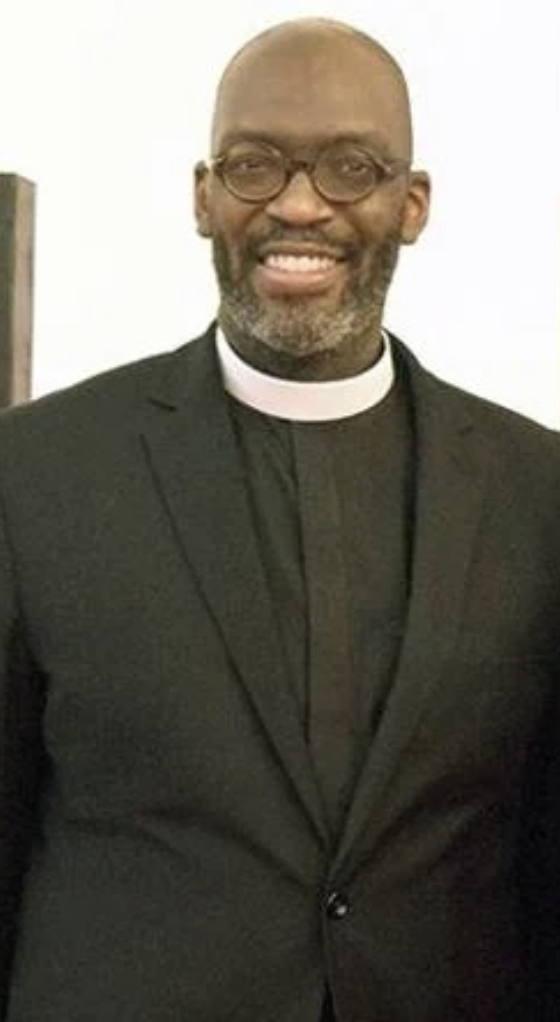
The Reverend Carey A. Grady is the pastor of Reid Chapel African Methodist Episcopal Church and a founding member of Midlands Organized for Equity and Justice (MORE Justice). He blogs regularly at www.careyagrady.com
Reprinted with permission from “The Panorama”.