By Rev. Joseph D. Bryant, 9th Episcopal District
The U.S. Supreme Court and state legislatures might have dealt a blow to African American representation and voting access, but the right to vote remains and must be exercised now more than ever, says Bishop Julius Harrison McAllister Jr.
McAllister, the presiding prelate of the 9th Episcipal District in Alabama, was among the organizers in efforts to fight national attacks to dilute Black political power. A major pushback occurred last spring in Alabama where thousands converged for the “All Roads Lead to the South” day of mobilization.
“The entire day on May 16 was a powerful illustration of self-determination as people from around the country, from various backgrounds, faiths and experience, gathered in solidarity and called for the restoration of justice at the ballot box,” McAllister recalled. “I remember growing up in church singing ‘When all of God’s children get together, what a time, what a time, what a time.’ Well, that day in Selma and Montgomery truly embodied the spirit of that song of praise, unity and anticipation of divine movement.”
How we got here:
The Supreme Court’s April ruling in Louisiana v. Callais gutted a significant portion of the Voting Rights Act. The court struck down a district it said was drawn largely based on race. The decision began a race of redistricting moves in several states, particularly Southern states controlled by Republicans.
Political leaders in Alabama, Louisiana, Florida Tennessee and other states took quick action after the ruling to redraw congressional and some state district voting lines to favor Republicans.
Opponents of new district lines call them racist because they marginalize Black voting power. GOP leaders, on the other hand, maintain that their efforts are purely partisan, which are now allowed by law. Still, race and party are largely aligned in the South, where African Americans overwhelmingly vote Democratic and most Black officeholders are also members of the Democratic Party.
Nevertheless, McAllister said voters must remain resilient and exercise their right to vote on election day when races across the county will be decided and the balance of power is at hand.
“While our rallies did not change the hearts of those in power to do the right thing on our behalf, what those activities did was awaken the collective consciousness of people to realize that basic rights are systematically being attacked,” McAllister said. “This is not just a Black issue, this is a fundamental American issue and a crisis of democracy that each of us must face head on while we still can. Tuesday is our moment to stand once again.”
Taking action with “All Roads Lead to the South:”
McAllister played a central role during the “All Roads Lead to the South” event that mobilized grass roots groups and allies to press for fair representation and voting access for African Americans in Alabama and nationwide.
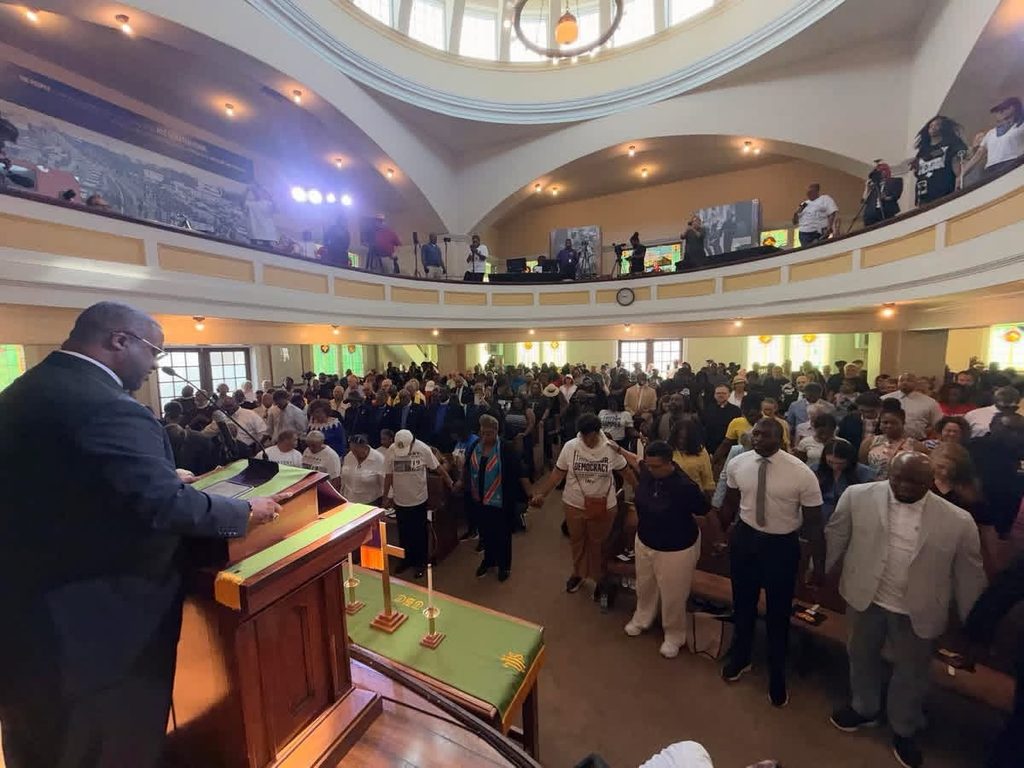
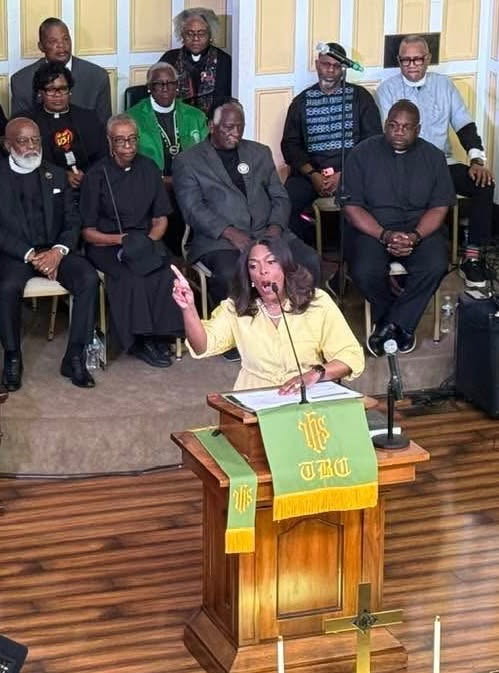
During a mass meeting at Tabernacle Baptist Church in Selma, a capacity crowd of pastors and representatives of different faiths and denominations made an ecumenical show of solidarity.
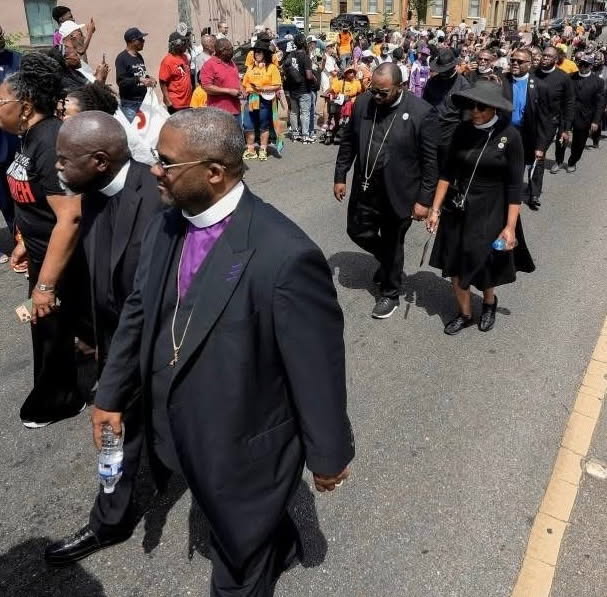
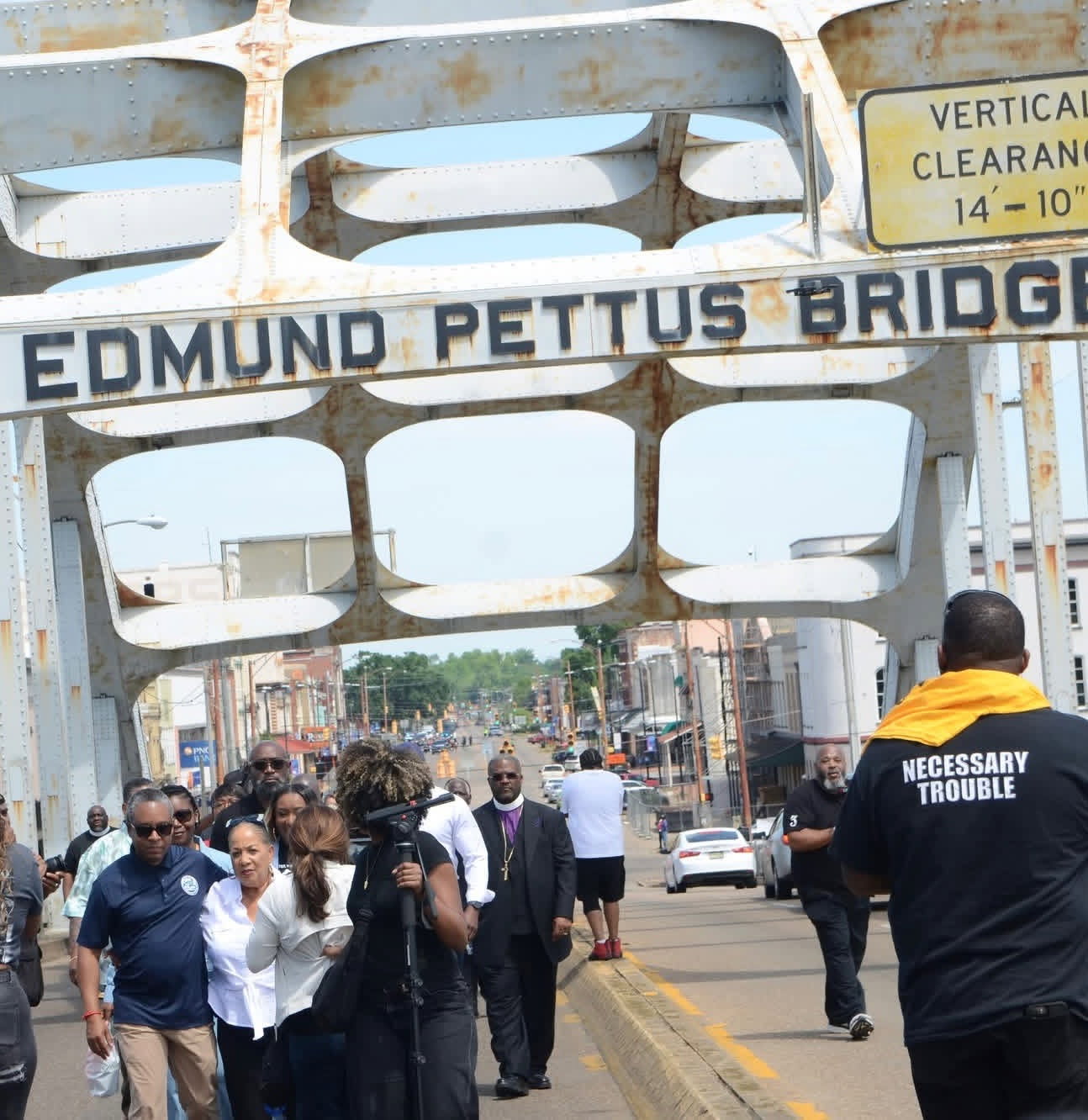
Each prayer and speech echoed the themes of unity and the universal rights of voting and fair representation. McAllister then led the group a few blocks down the street to the Edmund Pettus Bridge.
McAllister paused as he walked across the Edmund Pettus Bridge over the Alabama River and looked over his surroundings as he thought about images of blood shed there decades earlier that gave him the right to take that same path — this time in peace.
It was there that activists, pastors and ordinary people took to the bridge 61 years ago to assert their right to vote when they were viciously attacked by police and Alabama State Troopers who were on foot and on horseback.
“You read about history, you see the images in the books and you even meet and touch the people who were there at the time, but there’s something about actually standing at the spot where these moments occurred that makes it even more real, more personal to you,” McAllister said. “Even greater, the symbol of that bridge, named for a Klansman, has gained renewed importance as the rights that our elders bled for so many years earlier are again being challenged. We cannot stand idly by and let hard-earned progress slip through our hands like dry grains of sand.”
The moment, which became known as Bloody Sunday, led to the passage of the 1965 Voting Rights Act. It is that seminal legislation that paved the way for district lines that ushered in Black elected leaders on the federal level.
The Supreme Court’s recent actions, however, have chipped away at key provisions of the act. Now, emboldened legislators in largely Southern and Republican-dominated states have redrawn congressional and state legislative lines in ways that dilute Black voting strength by separating communities that would likely vote for Black or Democratic candidates.
In response, masses gathered in Selma and thousands more later assembled in front of the Alabama State Capitol in Montgomery.
Translating anger and frustration into action:
Months after the national day of action, organizers and elected leaders are urging citizens to hold on to the excitement of Selma and Montgomery by making their vote count this Tuesday.
“My hope is that people will be angry about the state of where we are enough that they’ll come out and vote,” said U.S. Rep. Terri Sewell, whose 7th Congressional District includes Selma and Birmingham, two cities that were the epicenter of the Civil Rights Movement.
“If any district understands the sacrifices that were made for the right to vote, it’s our district, Alabama’s 7th Congressional District,” Sewell said. “We have a proud legacy of civil rights and voting rights. And I really hope that we’ll lean into that legacy and shore up that legacy by showing them that we can still vote in high enough numbers that we can win.”
Sewell for years has sponsored the John R. Lewis Voting Rights Advancement Act to restore and modernize the protections of the Voting Rights Act. But while the bill passed in the House, it languished in the Senate, unable to get the 60 votes needed to avoid a filibuster.
Sewell, a native of Selma who was raised at Brown Chapel AME Church, said issues of civic activism and action are cornerstones of the denomination. That activism and action remains alive today and remains as critical as ever, she said.
“I was so proud of Bishop McAllister for really helping to galvanize a faith-based community around that ‘All Roads Lead to the South’ march,” Sewell said. “He was an integral part of that, and that’s right in line with our amazing history of helping to organize and mobilize our communities. Whether that’s food drives, toy drives, or voter registration drives, we have a long history of standing up and fighting injustices and fighting for our community.”
Maintaining the humanity, dignity, and resilience of Black people:
Fenika Miller, national field co-director for Black Voters Matter, said the success of the “All Roads Lead to the South” event illustrated the power of organized Black political power. With thousands converging in front of the Alabama Capitol, the collective call for action was evident, she said.
“I always remind folks that our job is not just to protect Black folks’ ability to cast a ballot; it’s to build enough organized Black power that our folks can determine what happens after those ballots are counted,” Miller said. “And for the purposes of how we respond to the attacks and the political violence through Callais and some of these other decisions that have come down, this tool that we have this time is the hammer that we’re going to use to get our lick back.”
Miller, who oversees work in Georgia, Alabama, Mississippi, and Texas, said the public must understand the long-term impact of their vote.
“We’ve got to make sure that we move folks from great despair into hope and the understanding that they are powerful. In fact, regardless of the barriers that are placed in front of them, regardless of the attempts to dilute their voting power, to draw them out to create obstacles to vote, they in fact do have the power to affect the change that they want to see.”
Miller also noted creative new efforts from groups large and small to inform the masses and urge participation in both the elections and overall civic engagement.
For example, funeral homes in Birmingham
partnered with Black Voters Matter this month to organize voter outreach initiatives through caravans throughout the city.
“I feel really good about how we’ve been able to organize in this environment that we’re actually living in and not the one that we are just wishing for,” Miller said. “What we’ve seen is a different kind of organizing, a different kind of fight back. And we’ve seen that resilience from our people that we always have known that we have had.”
Ecumenical calls for justice, respect and humanity are growing globally, McAllister noted.
“Each of us as followers of Christ have a responsibility to not only listen to His words, but put them into action,” the bishop said. “Christ spoke of peace and the dignity of every person as a creation of the Divine, and in doing so he challenged the greater political powers that his words of unity and equality threatened.”
On the global level, Pope Leo XIV of the Catholic Church in April visited war-scarred Cameroon in Africa where he addressed thousands and offered words of encouragement and a warning.
“Jesus told us: ‘Blessed are the peacemakers.’” Leo said, quoting from Jesus’ Sermon on the Mount, and then adding, “But woe to those who manipulate religion and the very name of God for their own military, economic or political gain, dragging that which is sacred into darkness and filth.”
The Pope continued:
“The world is being ravaged by a handful of tyrants,” he said, “yet it is held together by a multitude of supportive brothers and sisters.”
Even as methods of communication and organization evolve, Miller said the church remains a bedrock institution for Black political and social justice. Such was evident during “All Roads Lead to the South” where McAllister and a sea of pastors and members answered the call, she said.
Beyond the rallies, Miller said churches are used as central meeting spaces, staging locations and transportation hubs to mobilize and to take people to the polls.
“Regardless of the outcome of the election, folks will see the humanity, the dignity, and the resilience of Black people, that we will never lay down without putting up a fight,” Miller said.
—————————————————————————-
Rev. Joseph D. Bryant is pastor of St. John AME Church in Abbeville, Alabama which is located in the Ninth Episcopal District.