By Quardricos Driskell, Columnist
In the early fall of 2017, The Christian Recorder sent me to Tallahassee to cover then-Mayor Andrew Gillum, his connection to the African Methodist Episcopal Church, and his emerging campaign to become Florida’s first Black governor. Gillum and his family were members of Bethel AME Church in Tallahassee, then pastored by the Reverend Dr. Julius H. McAllister Jr., now a bishop, alongside his wife, Episcopal Supervisor Deana Young McAllister.
At the time, Gillum was a rising star in Democratic politics, a young, Black, progressive mayor attempting to make history in one of the country’s most consequential states. In 2018, he came remarkably close. Republican Ron DeSantis defeated him by approximately 32,000 votes out of more than 8 million cast, a margin of less than half a percentage point. My original assignment was about faith and politics: how Bethel AME had become an epicenter of social justice, civic engagement, and political empowerment, and how Gillum’s faith community helped shape the public leader he sought to become, which you can read here: The Christian Recorder, “A Profile of Religion and Politics: Bethel AME of Tallahassee.”
What I learned during that assignment has returned to me during Florida’s 2026 midterm elections. In some ways, this election feels like a political redux of 2018, but with the racial and partisan roles rearranged.
This time, the Republican nominee for governor is Byron Donalds, a Black congressman who rose politically through the Tea Party movement and later became a prominent ally of Trump. His Democratic opponent is David Jolly, a former Republican congressman who left the GOP, became one of Trump’s most visible critics, and eventually joined the Democratic Party. Jolly continues to describe himself as fiscally restrained and temperamentally moderate, but he now leads a Democratic ticket in a state whose politics have shifted decisively to the right.
At the same time, State Rep. Angie Nixon, a progressive Black Democrat from Jacksonville and a Democratic Socialist (someone who believes that the economy and society should be run democratically, in a way that doesn’t centralize capitalism), has secured her party’s nomination for the U.S. Senate. She will face Republican Sen. Ashley Moody. Donalds could become Florida’s first Black governor, while Nixon could become Florida’s first Black United States senator, though the latter is a long shot. Florida voters are therefore being presented with two very different expressions of Black political leadership: one conservative and Republican, the other progressive and Democratic.
The question is no longer simply whether Florida can elect a Black candidate statewide. The deeper question is: What kind of Black candidate is Florida willing to elect, and which voters will be willing to elect one?
Donalds enters the general election with considerable structural advantages. Florida has not elected a Democratic governor since Lawton Chiles won in 1994. Republicans have controlled the governor’s office continuously since January 1999, nearly 30 years, and currently maintain a substantial voter-registration advantage. No Democrat has won any statewide Florida contest since 2018.
Yet Donalds did not enter the general election with the enthusiastic support of every leader in his own party. Gov. Ron DeSantis remained neutral during the Republican primary and did not endorse Donalds. When CNN asked Donalds on election night whether he had heard from DeSantis, Donalds acknowledged that he had not but said he anticipated the governor’s eventual support.
That silence raises an unavoidable question. If Donalds is the Republican nominee, the beneficiary of Trump’s endorsement and the standard-bearer of a party that has dominated Florida politics for nearly three decades, why was the sitting Republican governor reluctant to embrace him?
Race should not automatically be declared the answer, but neither should it be dismissed as irrelevant. Political parties frequently celebrate Black candidates when they are useful symbols of diversity, but the true test comes when those candidates seek independent power. Endorsement is one thing. Entrusting a Black person with the executive authority of the nation’s third-largest state is another.
Donalds will also have to answer a different question: How much support can he earn from Black Floridians?
Black voters constitute approximately 13 percent of Florida’s registered electorate; they remain a crucial voting bloc, particularly in a close election. But Donalds cannot assume that shared racial identity will overcome profound disagreements over voting rights, education, health care, economic inequality, policing, or the teaching of Black history. Black voters are not obligated to support a candidate simply because he is Black. Descriptive representation matters, but it is not the same as substantive representation. A Black face in a high place does not automatically mean that Black communities will have a meaningful place in public policy.
Republicans have generally won Florida by combining overwhelming support from white voters with an increasingly competitive share of Latino voters. In the 2022 gubernatorial election, exit polling showed DeSantis receiving approximately 65 percent of the white vote, 58 percent of the Latino vote, and 13 percent of the Black vote. Those numbers demonstrate why the Republican path to victory does not require winning the Black vote, but it may still require avoiding overwhelming rejection from Black voters. They also show why it is misleading to speak of “the Latino vote” as though it were politically uniform.
Donalds has framed the election as a choice between preserving conservative governance and allowing Florida to become more like Democratic-led states. In his election-night argument, he praised DeSantis’s leadership and warned that Floridians who moved south in search of what he calls the “Florida dream” do not want their new home to resemble Virginia, Connecticut, New York or New Jersey.
Donalds argues that Floridians want to protect the “Florida dream” from the policies of Democratic-led states. But that dream must be measured against rising housing costs, unaffordable property insurance, health-care challenges and economic inequality.
If Donalds wins, Republicans will celebrate a historic breakthrough and present his victory as further proof that their party offers a political home to Black Americans. If he loses, some will undoubtedly argue that race, not ideology, or campaigning explains the defeat.
But the truth will require a more careful examination.
Did white Republican voters who readily supported DeSantis remain equally committed when the party’s nominee was a Black man? Did Donalds expand the Republican coalition among Black men and other Black voters, or did his policy positions prevent racial identification from becoming political support? Did Jolly persuade moderate and independent voters that party loyalty should give way to concerns about affordability and governance? And did the Republican establishment fully embrace Donalds, or merely tolerate him once primary voters made their choice?
Angie Nixon’s Senate campaign will present Florida with the mirror image of those questions. Will voters who say they are prepared for Black leadership support a Black woman whose politics challenge the economic and political establishment? Or is Black representation welcomed only when it arrives wrapped in an ideology the majority already finds comfortable?
Florida’s 2026 election is therefore larger than Donald’s, Jolly’s, Nixon’s, or Moody’s. It is a test of whether Black candidates can win statewide without surrendering either their identity or their convictions. It is also a reminder that Black voters are not political property to be inherited by Democrats or strategically displayed by Republicans.
Florida may be ready to make history. But history is more than placing a Black person in office. The real measure is whether Black political power is respected when it challenges the powerful and whether representation produces justice for the people whose names are so often invoked but whose needs are too easily ignored.
Florida will not prove that it has moved beyond race merely by electing a Black candidate. It will prove something only when Black leadership is neither feared as a threat, displayed as a trophy, nor mistaken for liberation, but judged honestly by whom it serves.
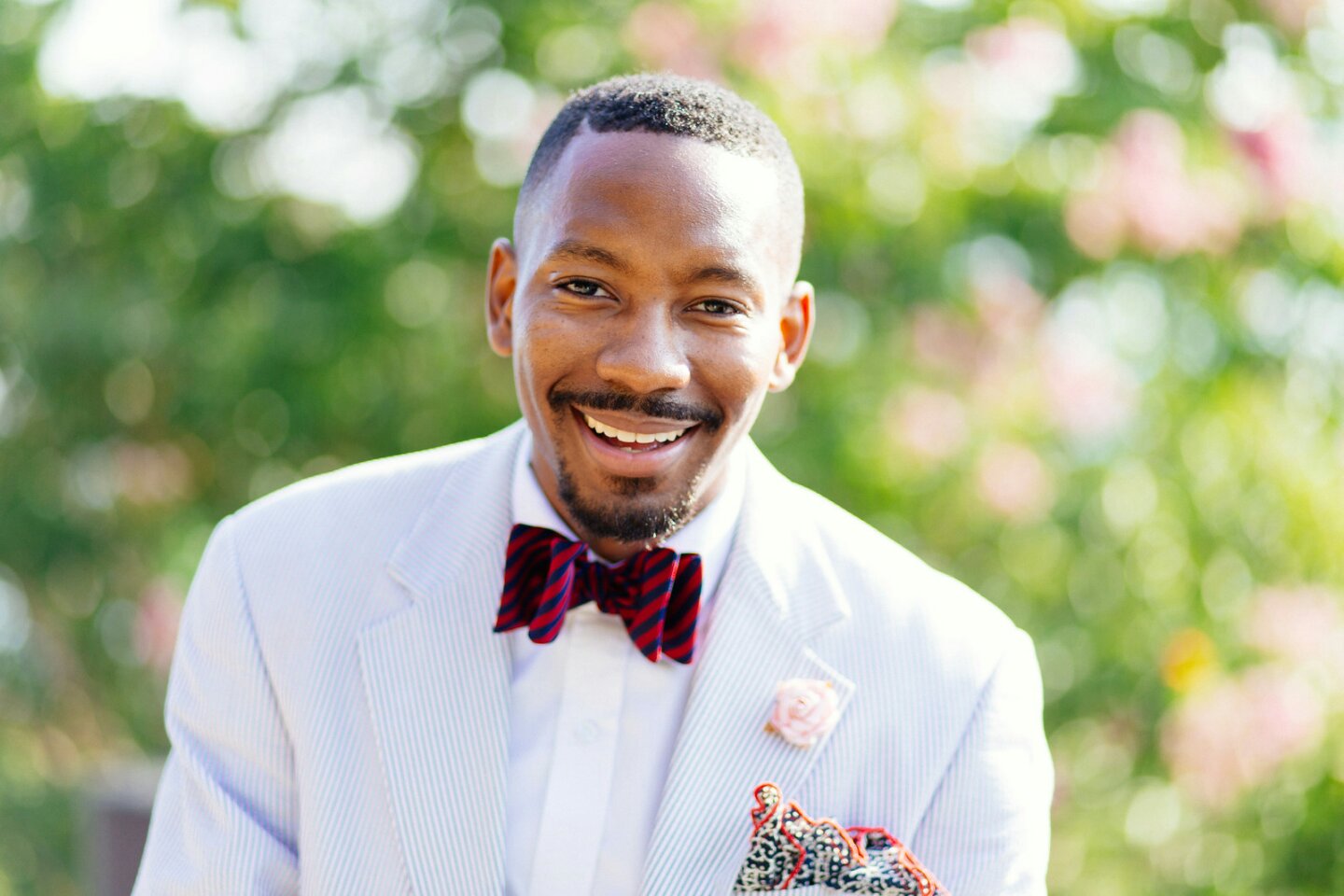
Reverend Professor Quardricos Bernard Driskell is a federal lobbyist, pastor of the historic Beulah Baptist Church in Alexandria, VA, and an adjunct professor of legislative politics at The George Washington University Graduate School of Political Management. Follow him on Twitter @q_driskell4.