By Rev. Brandon L. Thornton, 9th Episcopal District
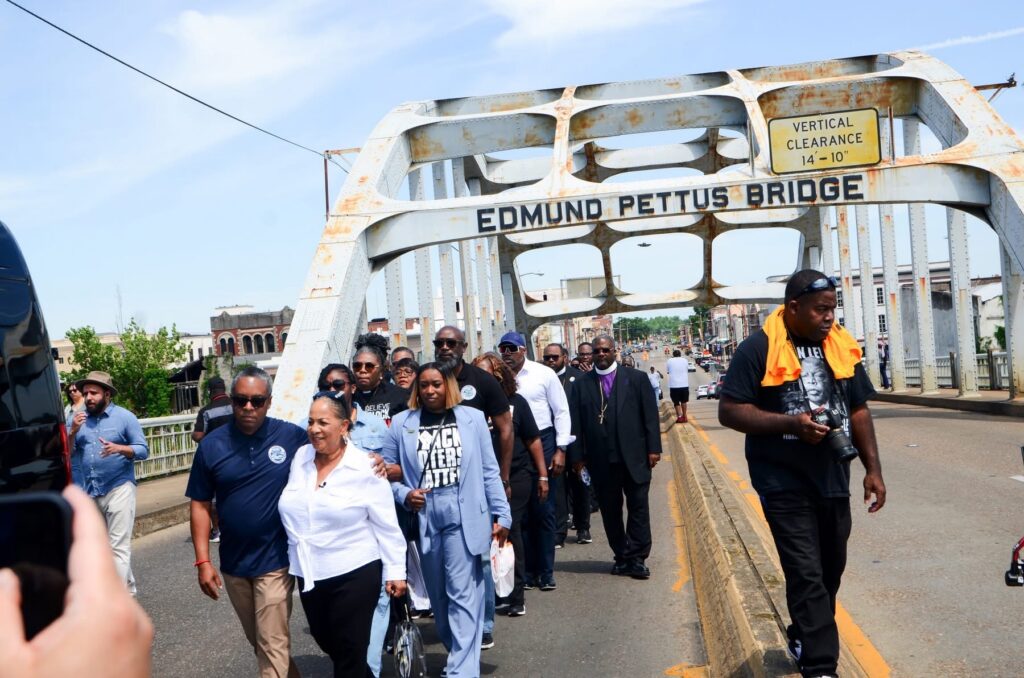
On the weekend of primary elections, thousands gathered throughout Selma and Montgomery, Alabama for “All Roads Lead to the South” and the National Day of Action for Voting Rights, where clergy, activists, organizers, students, elders, elected officials, and community voices assembled to confront ongoing attacks against voting rights, gerrymandering, and systematic efforts to silence marginalized communities, while reminding the nation that the struggle for Black dignity, Black political power, and full democratic participation did not end in 1965 and has never fully disappeared from the American landscape.
The weekend consisted of prayer services, marches, bridge crossings, rallies, public conversations, organizing efforts, and calls to action centered around justice, civic engagement, and the preservation of voting rights throughout the South. What became immediately clear was that this was not simply a ceremonial remembrance of the Civil Rights Movement or another historical commemoration designed for photographs and speeches. There was a seriousness hanging over the atmosphere because we who gathered believe and know the same forces that once openly resisted Black political participation have evolved into more sophisticated forms through voter suppression, racialized political rhetoric, attacks against Black history, and continued efforts to weaken the political influence of marginalized communities across America.
From the moment I crossed into Selma, I could feel the weight of the ground beneath my feet because Selma is not just another Southern town. Selma carries blood in its soil and prayers in its atmosphere, while still holding the memory of people who were beaten, jailed, humiliated, spat on, terrorized, and yet kept marching anyway. You cannot walk those streets casually because the city itself forces you to confront the cost of freedom, the brutality of American racism, and the courage of ordinary Black people who refused to surrender even when violence became the national response to their humanity.
Throughout the weekend, I was honored to stand alongside Bishop McAllister and members of the Ninth Episcopal District of the African Methodist Episcopal Church. Watching Bishop McAllister lead in those spaces mattered deeply to me because he understood the seriousness of the moment and consistently reminded us that the Black Church cannot afford to become silent, disconnected, or comfortable while people continue struggling beneath injustice. That reality remained in my spirit all weekend because the Black Church has always occupied a sacred and dangerous place within movements for justice and liberation throughout the South. Long before cameras arrived and politicians began delivering speeches, Black churches were already organizing communities, feeding families, educating children, sheltering activists, raising resources, and opening sanctuaries to people trying to survive systems intentionally designed to crush them spiritually, economically, socially, and politically.
Even while participating in the various gatherings throughout that day, my mind continually returned to Historic Brown Chapel African Methodist Episcopal Church because Brown Chapel sits at the heart of the Selma story. During the Civil Rights Movement, it became far more than a church building. It became a headquarters for organizing, prayer, strategy, resistance, and hope during one of the most violent and volatile seasons in modern American history. The more time I spent in Selma, the more I found myself reflecting on the late Reverend Dr. P.H. Lewis, the historic pastor of Brown Chapel during the movement years, because as a pastor myself, I kept asking one question repeatedly: what did it feel like to carry that level of responsibility while the world around you was bleeding, burning, and breaking apart? Every gathering brought risk. Every meeting brought surveillance. Every decision could place lives in danger. Yet the church doors stayed open. That thought stayed in my spirit all weekend because the church doors stayed open while Black people were denied the right to vote, while protesters were beaten in the streets. At the same time, communities struggled beneath segregation and racial terror, and pastors themselves became targets simply for refusing to abandon their people in the middle of suffering.
My reflections on Brown Chapel also became deeply personal because I have often had the opportunity to sit with Sister Alice P. Lewis-Hutchinson, wife of the Reverend Dr. P.H. Lewis and a member of the church I currently pastor. Through conversations over time, she has shared firsthand stories about those movement years, how people constantly came and went, how their home became a gathering place during the struggle, and how families carried the burden of the movement together while trying to maintain some sense of normalcy in the middle of chaos. Those conversations reminded me that behind every march, mass meeting, bridge crossing, and major historical moment were ordinary Black families trying to survive extraordinary pressure while carrying responsibilities history books often overlook.
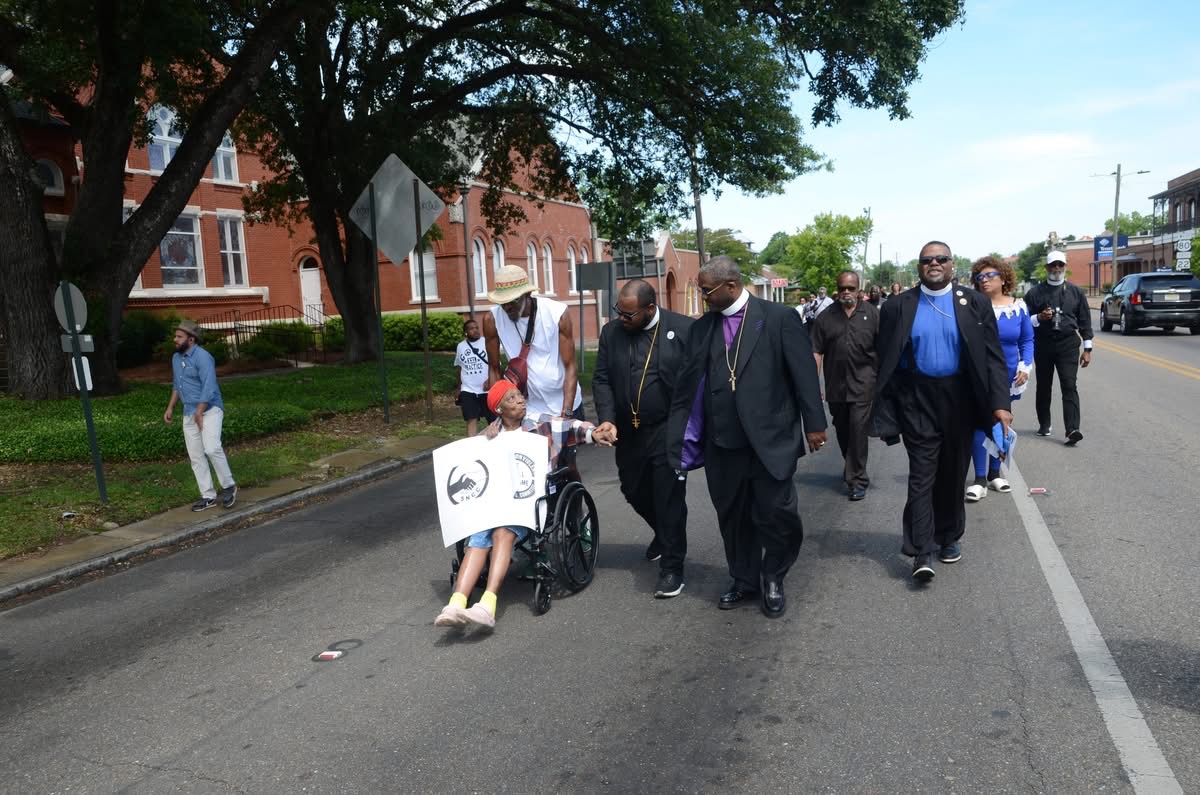
One of the most moving moments of the entire weekend came while walking across the Edmund Pettus Bridge holding the hand of Ms. Annie Pearl Avery, a living witness to the Civil Rights Movement and a representative of a generation of Black men and women who endured segregation, humiliation, intimidation, voter suppression, and racial violence firsthand. In that moment, the bridge stopped feeling historical. It started feeling human because walking beside her reminded me that the struggle for voting rights and human dignity is not ancient history for many Black Americans. There are still living witnesses carrying the memory of what this nation did to Black people then, and if we tell the truth, America is still attempting many of the same things right now in 2026. The water hoses may be gone, and the language may sound more polished, but the assault against Black voting power, Black history, Black voices, and Black existence never stopped. Yet even after the beatings, the dogs, the jail cells, the humiliation, the political games, and the exhaustion, they kept marching anyway.
After leaving Selma and gathering later in Montgomery alongside clergy, activists, organizers, and community leaders, I left the weekend carrying both gratitude and concern. Gratitude for those who sacrificed before us and concern because many of the same battles surrounding voting rights, justice, dignity, equality, and political representation remain in different forms today. What struck me most throughout Saturday’s events was realizing that the struggle for voting rights is not trapped inside black-and-white photographs or hidden away in museum exhibits. It is still living, breathing, marching, praying, organizing, resisting, and demanding to be seen in real time. Perhaps that remains the responsibility of the Black Church even now, to keep the doors open to the cries, struggles, and hopes of the people, even as the world outside those doors continues to try to silence them.
The Reverend Brandon L. Thornton is the pastor of Bethel AME Church in Mobile, Alabama, within the Ninth Episcopal District of the African Methodist Episcopal Church under the leadership of Presiding Prelate Bishop Julius H. McAllister, Jr.