

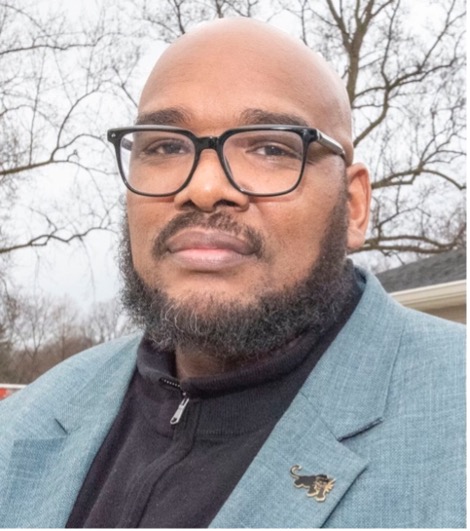
By Rev. Terrance L. Thomas, Contributing Writer
There is a dangerous phrase drifting through our pews and pulpits: “I’m Christian before I’m Black.” It sounds humble, even holy, a way to rise above race and focus on faith. But beneath that pious tone is a theological trap. That statement doesn’t just misplace priorities, it rewrites history, distorts identity, and serves a gospel that was never meant to set us free.
When we say we are “Christian before Black,” we echo the logic of those who enslaved us, those who demanded we kneel at the altar of whiteness before we could kneel at the altar of God. That phrase asks us to amputate pieces of ourselves that the world finds too political, too proud, or too prophetic. But the God who made us in the divine image and called all creation “very good” made no mistake with our melanin.
Frederick Douglass told the truth in plain speech. He exposed the difference between the Christianity of Christ, liberating, loving, and just, and the Christianity of this land, which baptized chains and consecrated cruelty. One saved souls; the other sold them.
Our ancestors in the hush harbor knew that difference in their bones. They slipped into the woods to pray, shout, and hear God without white surveillance. They understood salvation not as an escape from earth, but as freedom on it. Out of that holy resistance was born the African Methodist Episcopal Church, the first denomination in this nation to declare that Black faith is political, Black life is sacred, and Black people are fully human in the eyes of God.
We were never handed a pure gospel. We snatched fragments of a colonized Christianity and, through sorrow, song, and struggle, made it whole.
When someone says, “I’m Christian before I’m Black,” they confuse order with hierarchy. Order is sequence; hierarchy is value. God never ranked our faith above our flesh, because God created both. Blackness is not a downgrade to discipleship; it is the context through which we encounter the world and the Word.
Scripture begins with embodiment: “Let us make humankind in our image.” The Imago Dei is not colorless. The same Creator who splashed sunsets in crimson and oceans in deep blue wrapped divine artistry in shades of chestnut, bronze, and midnight skin.
And when the Word became flesh, that flesh was brown, colonized, hunted, and crucified by the state. The Incarnation is God’s eternal rejection of colorblind theology. God sees. God knows. God sides with the oppressed.
When Philip baptized the Ethiopian in Acts 8, he did not demand that he shed his identity to inherit his salvation. He went home fully African and fully Christian. Meanwhile, no one ever asks white Christians to be “Christian before white,” because whiteness is treated as neutral, normal, and nearest to God. That is not gospel. That is white supremacy in a choir robe.
This “Christian before Black” rhetoric is not native to our tradition. You won’t find it in Richard Allen’s sermons, Jarena Lee’s testimony, or the long witness of our spirituals. It is imported, smuggled into our sanctuaries through white evangelical theology that fears Black consciousness. It is designed to do one thing: neutralize our prophetic witness.
White evangelicalism has never had a problem blending faith with nationalism, militarism, or partisan power. They drape crosses in flags and call it discipleship. But when we say “Black Lives Matter,” suddenly we are “being political” and must “remember we are Christians first.” White Christians are never asked to renounce whiteness or privilege to prove devotion to Christ, only Black Christians are asked to disappear.
The message is clear: your Christ may be universal, but your Blackness must be erased. And who benefits when we accept that? Not our people. Not our children. Not our communities. The only winners are the systems that need us to remain silent so they can remain intact.
This became painfully clear in Charleston, at Mother Emanuel AME, where the blood of our saints spilled in Bible Study. Their massacre was both martyrdom and indictment. Martyrdom, because Black Christians were murdered in the sanctuary of a historic Black Church, worshiping the Christ of the oppressed. Indictment, because America continues to clutch its myths with one hand while shedding Black blood with the other. Mother Emanuel stands as an eternal testimony that our Blackness and our faith are attacked together, and therefore must be defended together.
The Black Church was never a side note in American religion; it has always been the moral heartbeat of this nation. When the temples of whiteness denied our humanity, the Black Church built altars where nobody needed permission to pray.
From brush arbor to brick sanctuary, from Harriet and Sojourner to Fannie Lou and King, from nameless women who led without titles to laypeople who led without fear, the Black Church has been our refuge, our school, our organizing headquarters, and our song of survival. It is also a womanist witness, insisting that the voices of the most marginalized are indispensable to the gospel itself.
The Black Church is not a building. It is a blueprint, a holy protest against empire and a sacred home for the disinherited. It keeps Jesus’ mission in Luke 4 at the center: good news to the poor, release to the captives, sight to the blind, and freedom for the oppressed. We are not “post-racial.” The old demons just got Wi-Fi. Police violence, economic disparity, educational pipelines to prison, and cultural theft dressed up as diversity all testify that the work is unfinished.
This nation still needs pulpits that can preach Christ crucified and Black bodies dignified. It still needs sanctuaries where we heal from trauma, confront injustice, teach our children truth, and dare to imagine freedom. The Black Church remains the one institution where being fully human and fully holy are not at odds.
Liberation is not an extracurricular activity of the gospel; it is the gospel. If faith does not free, it is not the gospel. If the Church does not challenge the empire, it is not the Church. Our ancestors’ faith endured not because they forgot who they were, but because they remembered, and refused to be shamed out of their God-given identity.
So with conviction and hope, I declare: I am unapologetically Black and unapologetically Christian, because the God who made me both never asked me to choose. Before we were called Christians, we were Black. And when Christ returns, he will recognize us, a people who turned suffering into song, pain into praise, and bondage into a blueprint for freedom.
May we honor their memory. May we guard our identity. And may we never again bow to a theology that demands our erasure.


Galatians 5:16-17 This I say then, Walk in the Spirit, and you shall not fulfil the lust of the flesh. 17 For the flesh lusteth against the Spirit, and the Spirit against the flesh: and these are contrary the one to the other: so that ye cannot do the things that ye would. So,God did indeed rank our Spirit over our flesh and directs us to “walk in the Spirit” That does not negate or devalue the color of our flesh, or our experiences in that flesh, just how we handle it.
Reverend Thomas, As a Black Christian, I am grateful and heartened by this piece and your message. You’ve captured the whole thing in this inspiring and liberating sentence – “God never ranked our faith above our flesh, because God created both. Blackness is not a downgrade to discipleship; it is the context through which we encounter the world and the Word.”
I AM AME because our church unapologetically asserts our dignity and worth. Our vernacular and songs are celebrated in our houses of worship. Our bodies and tongues are glorified. We stand on the shoulders of our founders and ancestors who fully understood that their Africanness was as essential as their faith.
No Ways Tired!
Amen!
I disagree. The Gospel of Jesus Christ demands a commitment to Him above all else, including ethnicity, race, nationality and social standing. A hard pill to swallow indeed, for the Jews and non-Jews of Jesus’ day; a resistance that continues to find expression among believers and non-believers today. As a new creation in Christ, I do not prioritize salvaging my earthly identity or position above my kinship with Christ, regardless of the injustices and inequities. Instead, I identify as a Child of God which trumps anything else I aspire to be. So, I am a Christian first, seeking first the Kingdom of God, placing His righteous demands above my own. My Blackness is interpreted in many ways in this society, resulting in inequity, oppression, persecution, etc. But as a new creature in Christ, a child of God, and joint heir with Christ. “There is no longer Jew or Gentile, slave or free, male or female, for we are all one in Christ Jesus.” Gal 3:28 Try as they might, persecution, social conventions, politics, traditions and personal beliefs cannot change that.
You should stop saying this out loud. It does not land the way you think.
When they are saying they are Christian before being Black they are saying that they are keeping God first and see their identity as being in Christ first before being Black. Don’t get me wrong, I’m not saying that we shouldn’t celebrate our culture because we should as other cultures also do. We should definitely celebrate our culture and I am happy that we do it in the AME church. However, our identity is in Christ and not in being Black and it should not be an idol for us, which is all they are saying with the phrase. We are salt and light and should be looking to help with healing, forgiveness, and reconciliation. I appreciate the article and discussion.
Christianity could be disproven tomorrow. My Blackness…cannot.
You can keep God and your Blackness at the forefront.
What nonsense! Judging from this article, it’s clear that someone needs to “get their theology straight!”
Is it not written that we “are all one body in Christ!!!!???”
There is no “Black Church” or “White Church” or “Chi-negro” church, just as there’s no biblical precedent that establishes the title “Reverend” as some ecclesiastical office or title in YHVH’s church!😒
Say less.🤫
Yes this was fake smart
Great article as being a Christian vs. Black person. U broke down that being a Christian is Humanity. God cares about all humanity regardless of race.
I appreciate and thank you.