

By: Quardricos B. Driskell, Columnist
“When I get to heaven,” John Prine famously wrote and sang, “I’m gonna shake God’s hand. Thank him for more blessings than one man can stand.”
Maybe that’s where conversations begin in eternity—with gratitude, curiosity, and the desire to know Jesus more deeply. In another of his songs, Prine imagines bumping into the Savior who “needed somebody to talk to.” Imagine that—Jesus needing conversation, someone who would listen.
Now imagine this: Charlie Kirk sitting down with Jesus … and listening.
Charlie Kirk was a conservative activist and commentator best known as the founder of Turning Point USA, an organization focused on mobilizing young people around limited government and free-market ideals. He was also a prominent media figure, serving as an influential voice in conservative politics and within Christian Nationalist circles.
But Charlie Kirk listening would be a radical departure from the way Kirk has handled his public life. I didn’t know Charlie Kirk. We met and sat on a panel together. But he was known for his “prove me wrong” debates, he has built a career not on conversation, but on confrontation. His reputation rests less on the exchange of ideas and more on winning the argument with clever quips and rehearsed one-liners. But heaven has a way of disarming us. The one-upmanship fades. The rehearsed lines don’t matter anymore. In heaven, we don’t arrive with all the answers—we arrive with questions.
Picture Charlie sitting beside a Black man who never made it into flight school—not for lack of talent or skill, but because racism barred the door. Kirk, who once questioned whether Black pilots were “qualified” or simply “DEI hires,” would be surrounded by hundreds of men whose dreams were deferred because of prejudice, yet whose dignity and calling were undeniable. Their presence would force a different kind of reckoning—a holy education on justice, worth, and truth.
Or picture him speaking with a transgender girl. Not as an object of ridicule. Not as a headline for a culture war. But as a child of God telling her story in her own words: When did you first feel different? Who first listened to you? What gave you hope? What caused you pain? Questions that in this life he rarely thought to ask—but in heaven he will have no choice but to hear.
And then there are the children of Sandy Hook. In heaven they still gather for lessons, the ones interrupted by bullets on that December day in 2012. When Charlie meets them, they will testify—not about politics, but about the sanctity of life itself. Surrounded by these children, he will begin to understand what he never paused to consider: that the right to carry a gun will never outweigh a child’s right to live. In their presence, clever soundbites will crumble. Their witness will silence the quick-tongued debater, and for once, he will listen.
But maybe the harder truth is this: Charlie Kirk didn’t have to wait until heaven to start listening. Neither do we. The poor, the marginalized, the grieving, and the silenced are already speaking here and now. The question is whether Charlie—or any of us—have the courage to hear them before the trumpet sounds. Because if heaven teaches us anything, it is this: the people we are most afraid of, the people we most dismiss, the people we most despise—they may be the very ones God appoints to teach us what salvation really means.
And perhaps the most unsettling thought is this: if Charlie Kirk is in heaven, then some of us may need to ask whether we are prepared to sit beside him, listen to him learn, and watch God’s mercy do what ours never could.
And if that offends us—that heaven is a place of Black pilots, transgender children, and the slain of children of Sandy Hook— and yes, maybe even Charlie Kirk then maybe we don’t really want heaven at all.
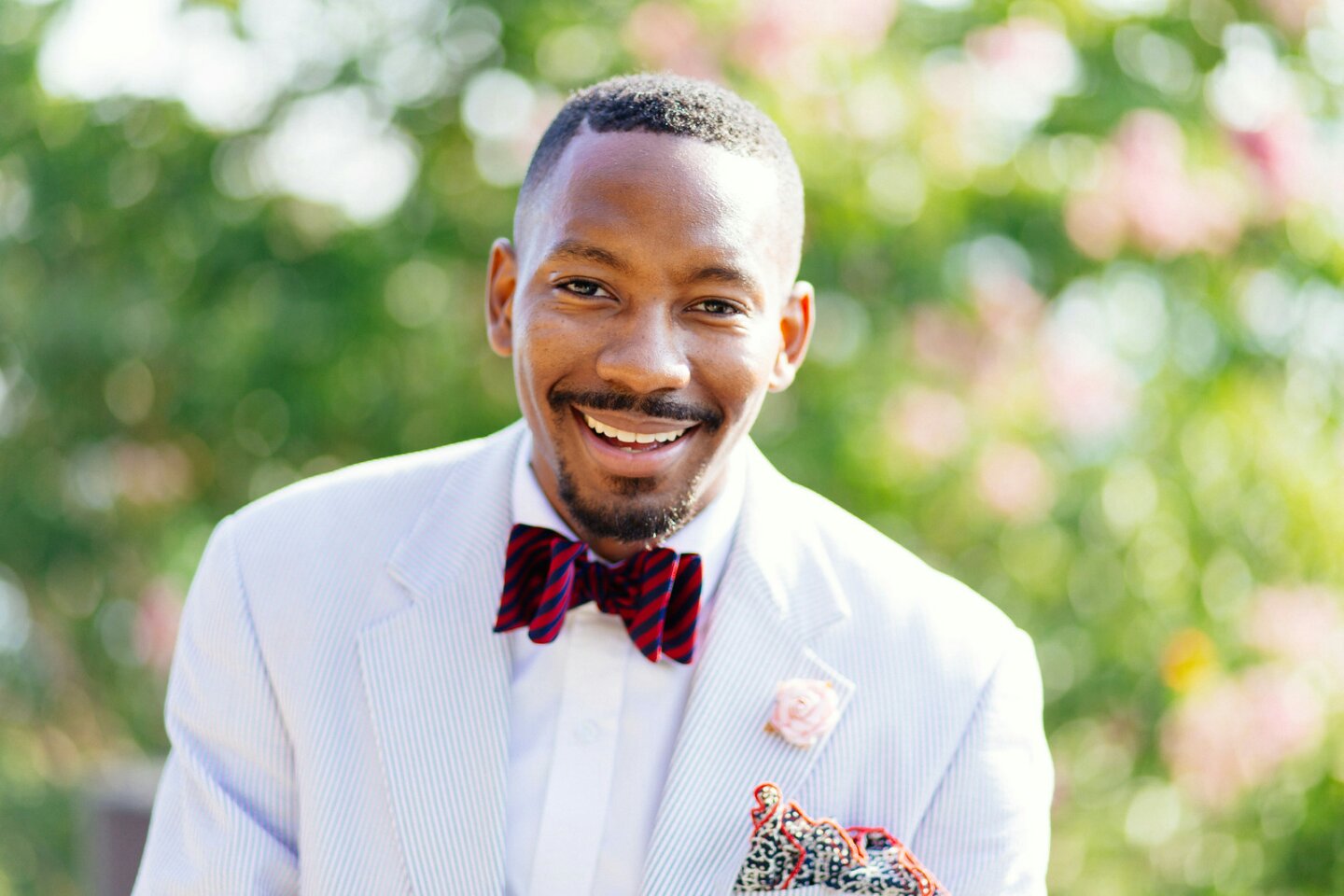
Quardricos Bernard Driskell is a federal health care lobbyist and an adjunct professor of legislative politics, where he teaches race, religion, and politics at George Washington University Graduate School of Political Management. He also serves as senior pastor of the historic Beulah Baptist Church in Alexandria, Va., and is a member of Faith in Public Life’s national coalition. Follow him on Twitter @q_driskell4.


Great stuff. Was not a fan of Charlie Kirk. Done the homework and all the nonsense about context is a lot of rubbish. White Christian Nationalism seemed to be his main goal. There are no white jobs and black jobs. He actually said America was a better country during the 50 or so years immigration was limited to western europeans primarily. He wanted a homogenous society. Well, heaven will blow his mind, if he gets in. I don’t hate people like Charlie. I hate the things they appear to stand for. Heaven will not be all white people and Jesus didn’t have blonde hair or blue eyes.
My heart sank and the deeper I got into your piece, the sadder I felt. I feel like you were coming from a place of hostility and possibly jealousy.
In this day and age if a man couldn’t get through, or to flight school, it’s not a white man’s fault. Maybe the man should look within instead of always looking for the nearest white man to blame.
Charlie would have never wrote such a hateful article if it had been your body in the ground at age 31.
It just shows your character.
You seem as divisive as Charlie Kirk. I went to a Baptist Church for a funeral and a Trump protest broke out. That’s faith? Don’t think so. Like Charlie you need to get off of your soap box.
Reading your post, I could not help but think of the rich man and Lazarus. They both died but the outcomes were much different. Lazarus was seen by the rich man in the arms of Abraham. A chasm separated them, and the rich man wanted Abraham to allow Lazarus to bring him a cool drink. Abraham made his bed in hell and there he would be. It was too late for him, while he had the opportunity to help and show love, he showed disdain.
Thank you for that perspective!! Wow!
Great commentary. It challenges me to really think about not only the conversations I have with others, but also the thoughts. Only God through Jesus can determine who enters the kingdom of heaven and unfortunately it can be our poor human misunderstanding that could keep us out. His grace and mercy. Thank you sir.
What a powerful commentary….you provided great insight!
Definitely something to consider!
Powerful
Wow! it is time to take note of will my earthly actions and my religious beliefs allow me to get into heaven.
Yes, I do agree!!
Nothing you do, good or great will get you into heaven. You can only get there through Jesus.
The power of meaningful conversation always begins with listening. Conversation sets the tone for new ideas and diverse perspectives on the issues discussed. When we proceed in this manner—in small groups or larger venues—it cultivates empathy that fosters respect for and appreciation of personal, familial, political, cultural, and social differences.
Wow! What better way to learn who we are as people, especially we are Christians.
Thank you. I have been searching for a way to have compassion for a person who didn’t speak well of me as a woman and a Black woman. Killing him wasn’t the solution. Will we ever be able to sit down and solve our differences in a peaceful way? Violence tears us farther and farther apart. Jesus showed us on the cross that asking for God’s forgiveness is the best way and not violence. PEACE!!!
Why would such a demonic, racist, sexist, traitor of America and the Constitution, by trying to install trump as A DICTATOR, be allowed into Heaven? Moreover, Charlie Kirk was pleased that his “rhetoric” helped motivate and inspire the increase in lynchings of Black men. So again, why would such a person allowed into heaven? Charlie Kirk’s daughters will continue his legacy of hate.
That is my question exactly!!!! But we, who believe in heaven, will never know until we get there who gets in. Here on earth we have to remember the words of Jesus “the first shall be last and the last shall be first” Haunting words. I guess we have to keep trying to live up to Jesus words and try to be more like Him, accepting all. The other words of Jesus: “whatever you do for the least of my brethren, you do for ME” Let that sink in and think of not only Charlie Kirk but those who are supposedly running out country.