

By Rev. Dr. Nekeshia S. Harris, 11th Episcopal District
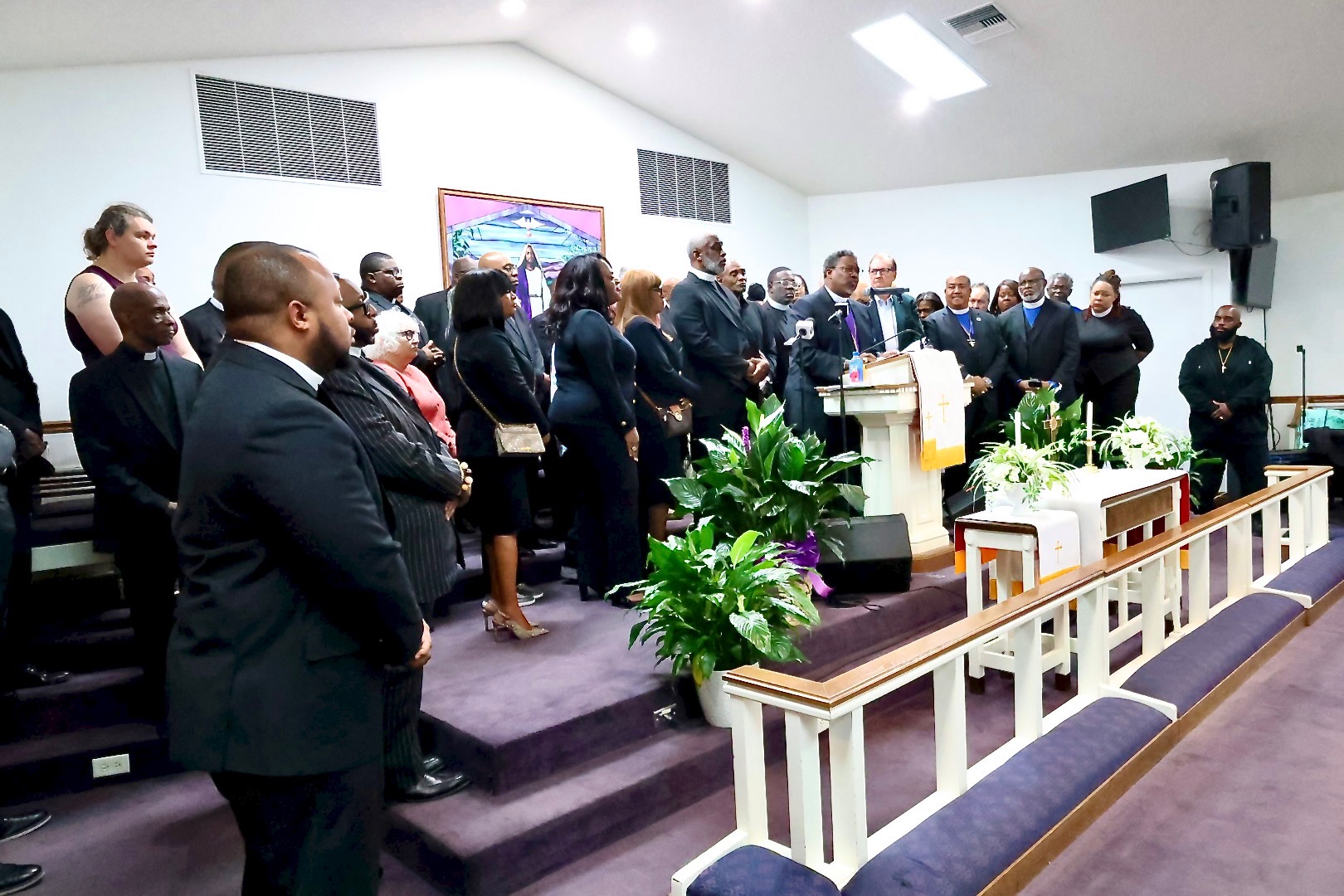
CLAY COUNTY, FL — On the final day of 2025, a coalition of faith leaders and community advocates gathered to demand systemic changes within the Clay County School Board, following what they described as “irresponsible and unacceptable” social media comments made by an elected official.
Bishop Marvin C. Zanders II, Presiding Bishop of the 11th Episcopal District of the African Methodist Episcopal (AME) Church, led the call for action in a press conference hosted by Pastor Jeffrey Dove and the East Conference Ministerial Alliance. The focus of the outcry is recent rhetoric from School Board Member Robert Alvero, which Bishop Zanders characterized as “fear-mongering” and “gaslighting” toward the African American community.
A Call for Dignity
Standing before local leaders, Bishop Zanders — a Clay County resident whose own sons attended Oakleaf High School — spoke of the deep harm caused when those entrusted with the education of children use demeaning language.
“Words matter; they create your world,” Zanders stated. “When an elected official speaks with such broad condemnation of an entire community, it sends a harmful message, especially to students of African American descent who deserve to know that those in leadership see their dignity.”
The Bishop highlighted a stark demographic reality: of the eight schools in District 2, which Alvero represents, five are majority African American. Zanders questioned how a leader could effectively provide guidance and support to a student body they have “characterized as being on the margins.”
State-Level Scrutiny
The controversy has already reached the state level. Bishop Zanders cited a December 22, 2025, letter from the Florida Commissioner of Education, which called Alvero’s conduct “unprofessional” and questioned how someone overseeing the education of 39,000 students could speak in such a manner.
Proposed Reforms
The AME leadership did not just offer criticism; they presented a formal set of recommendations to the Clay County School Board to ensure such rhetoric is “neither normalized nor repeated”:
- A Revised Code of Conduct: Implementing clear prohibitions against discriminatory public statements by board members.
- Mandatory Training: Required courses in cultural competence, implicit bias, and anti-racism for all board members and senior staff.
- Transparent Accountability: Establishing mechanisms to address actions that undermine equity and inclusion.
- Community Engagement: Actively involving faith leaders and families to rebuild trust.
Looking Ahead
The community is now looking toward two critical dates: the January 6 school board meeting and a January 21, 2026, meeting with the Commission on Education, where many hope for a formal resolution.
“You have to face it to fix it,” Zanders said, quoting James Baldwin. “Our children are watching, our educators are watching, and our community is watching. Leadership requires wisdom, humility, and a commitment to serve all people with fairness.”
As the year closed, the message from the 11th Episcopal District was clear: the era of silence regarding “implicit bias” in public education is over.

I agree! And if everyone would speak up about the school districts and their piety, maybe this type of belittling would cease! It will take all persons participating.
Newzion Raleigh fla Family