


Adihamu Gram Karneh, 14th Episcopal District
In the life of the African Methodist Episcopal Church, there are moments when the Church pauses not to slow down, but to listen, realign, and recommit. The Global Development Council (GDC) was born out of such a moment.
The AME Church has never been content with survival alone. From its founding in resistance to racial exclusion, it has consistently asked deeper questions: How do we educate our people? How do we empower our youth? How do we grow the Church while uplifting communities? How do we speak with one voice across continents?
As the AME Church expanded beyond the United States into Africa, the Caribbean, Europe, and other parts of the world, particularly across Episcopal Districts 14 through 20, these questions became more urgent and more complex. While the realities of ministry in these districts differed, the mission remained one.
It was in this context that the Church, through the General Conference, authorized what was then known as the African Jurisdictional Council (AJC) around 2000. The AJC was created to provide a structured space where overseas districts could engage the broader Church on matters of growth, governance, and development.
Over time, that vision evolved. The conversation expanded beyond jurisdictional concerns into a wider framework of global development, collaboration, and shared responsibility. From this evolution emerged what we now know as the Global Development Council (GDC).
The GDC was never intended to be just another meeting on the Church calendar. It was envisioned as a table of alignment, a place where bishops, clergy, and lay leaders could gather to assess the state of the Church’s global work and chart a course forward together.
Historically, the work of the GDC has centered on key pillars that mirror the heartbeat of the AME Church itself: education, evangelism, Christian education, youth and young adult engagement, economic development, finance, and global witness. These are not abstract ideals. They are lived realities, congregations running schools, mentoring young people, training leaders, sustaining ministries, and serving communities often facing economic and social hardship.
From Lusaka to Monrovia to Cape Town to Maputo, from virtual convenings to in-person gatherings, the GDC has traveled with the Church, meeting the moment as circumstances required. Each convening has carried the same underlying question: How can the AME Church be more intentional, more united, and more effective in fulfilling its mission across the globe?
Yet, like any living institution, the GDC has faced scrutiny. Members across Districts continue to echo concerns about its essence and impact. Some ask whether it has fully lived up to its promise. Others question its visibility, its outcomes, and its long-term influence. These questions are not signs of failure. They are signs of care. They reflect a Church that believes the GDC matters enough to be improved.


Congratulations
This is awesome. It brings to the front burner critical issues that could shape the church in the right direction. We need to ask the right questions if these changes we seek will come to bear.
God bless and thank you for the post.
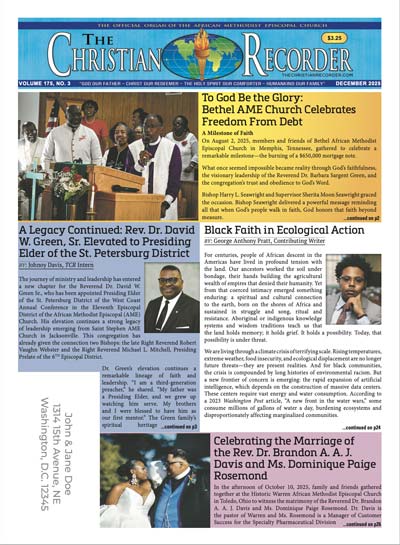
Today, my heart overflows with gratitude to God for a defining milestone my very first article as a contributor to “The Christian Recorder” from the global level has been officially published.
This is more than a personal achievement; it is a divine reminder that God is opening doors for new voices and fresh perspectives across our beloved African Methodist Episcopal Church. It is a moment that affirms that our Church is boldly seizing the pen to rewrite our narrative and tell our story from a place of truth, purpose, and vision.
The Global Development Council stands as a beacon for transformative leadership, and I am deeply honored to contribute to this global mission of impact, growth, and spiritual advancement.
To God be all the glory for what He has done and for what lies ahead.