

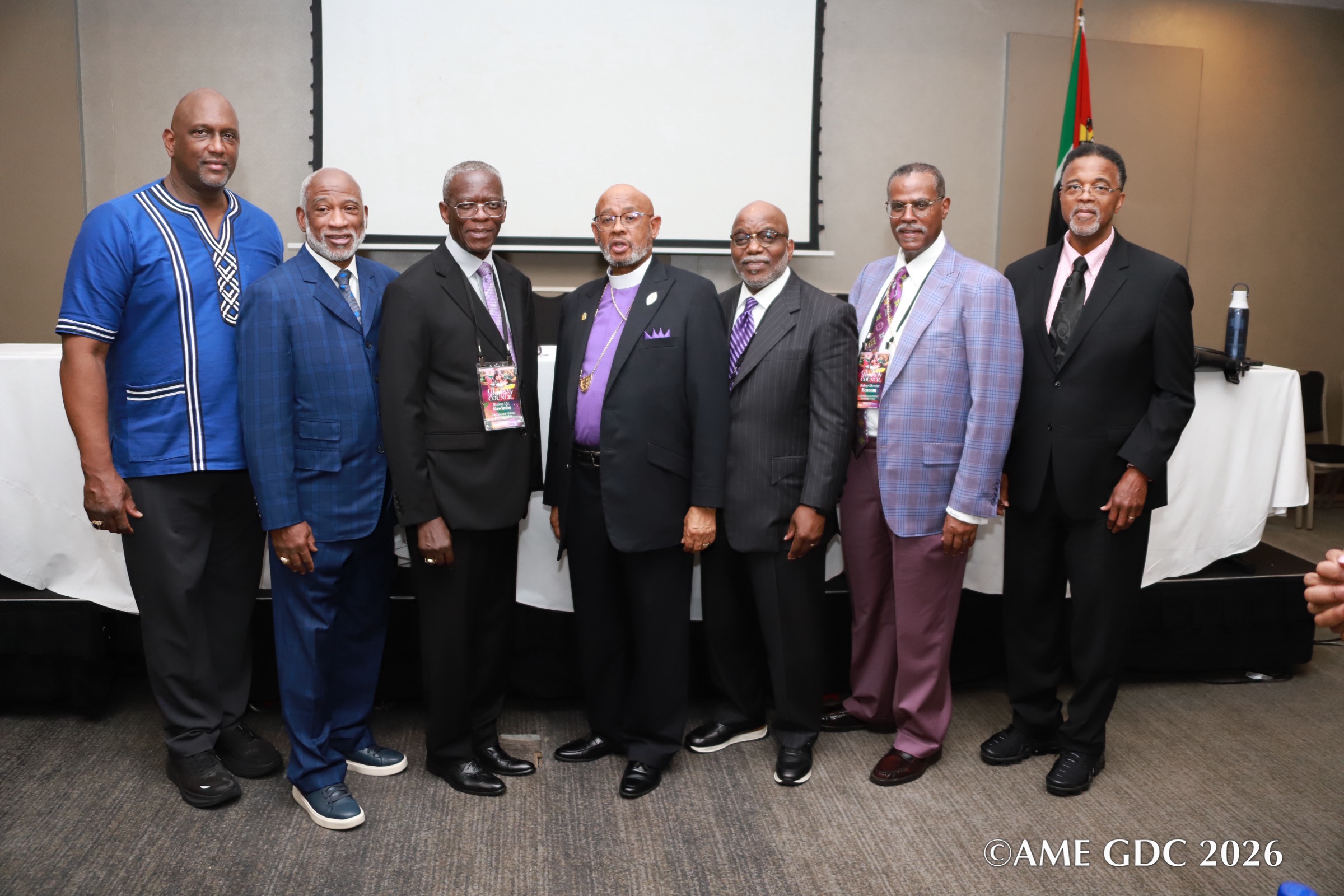
By Rev. Gaborone P. Lesito, 19th Episcopal District TCR Field Representative
From the opening session, the 2026 General Development Council (GDC), under the chairmanship of Bishop Paul JM Kawimbe, adopted a deliberate and clarifying posture: the GDC, from its forerunner, the Africa Jurisdictional Council (AJC), was never intended to be merely about the election of Bishops. Rather, it is a developmental instrument of the Connection—designed to strengthen mission, structure, sustainability, and impact across Episcopal Districts 14-20.
The Global Development Council (GDC) advances the mission of the African Methodist Episcopal Church by promoting global unity, leadership development, and sustainable growth. It seeks to strengthen collaboration among AME Churches worldwide; develop clergy and lay leaders; foster congregational and economic development; expand inclusive governance and representation; address contextual and regional challenges—particularly outside the United States; and propose forward-looking legislation to ensure the continued advancement of the global church.
The daily updates carried in The Christian Recorder since Wednesday, 18 February, consistently reflected this widened lens. The emphasis throughout the week was clear—development, strategy, accountability, and measurable progress.
A GDC Reimagined: Strategy at the Centre
One of the most defining features of this GDC was the introduction of a structured Strategic Planning Session, facilitated by the Rev. Betty Schroeder (PE). The body approved eight strategic initiatives, and breakaway sessions were convened to develop concrete implementation frameworks, complete with timelines and projected budgets based on the following themes: Mission Alignment, Economic Development, Church Growth, Capacity Building, Holistic Development, Communication, Resource Accountability, and Monitoring and Evaluation (M&E).
Delegates did not simply discuss aspirations; they worked through operational details. The reports presented in plenary reflected a seriousness of purpose that distinguished this GDC from previous gatherings.
In her final report-back, Rev. Schroeder thanked the Strategic Planning Team and acknowledged the Bishops for guiding the process. The resolutions were formally adopted, marking a unified commitment to implementation.
From Reporting to Demonstrable Impact
Departmental and committee engagements this year reflected a notable shift. Reports were structured less around internal activity and more around tangible impact in communities served by the church.
Highlights included:
Strengthened Clergy Development initiatives.
Renewed intentionality in Youth Development and leadership cultivation.
Registration of an Economic Development Company in South Africa, positioning the church for structured economic engagement.
Continued work in schools and universities, reaffirming the church’s historic educational mission.
The daily summaries underscored a movement toward outward-facing ministry—faith expressed through measurable community transformation.
Component Meetings: Strengthening the Connection
The vitality of the Connection was evident in the component meetings:
RAYAC fortified its identity and mission.
WIM strengthened relational ties across districts.
The WMS marked a sacred moment with the robing of two Supervisors.
The Lay Organisation held a few empowerment sessions, deliberated on legislative amendments, and concluded its sessions with the election of a new executive.
Together, these gatherings reflected unity of purpose across diverse expressions of ministry.
A Transparent Candidates Forum
Eleven candidates from across the Connection were afforded the opportunity to present their aspirations and intentions for the offices they seek.
Strategic Directives and Implementation Timeline
In his closing guidance, Bishop Kawimbe expressed gratitude to the Bishops, the Chief Financial Officer, and the facilitator of the Strategic Planning process before outlining clear directives for execution.
Phase 1 – Immediate Actions:
Circulation and summarisation of the Strategic Plan.
Constitution of a Strategic Plan Committee.
Short-term action items within 90 days (by May 2026).
Costing of all strategic initiatives.
Phase 2 – By August–December 2026:
Presentation of a complete final plan by August 2026.
CIPC registration and opening of the required account.
A request to Bishops to introduce the voluntary “One Dollar” concept.
Establishment of a Communication Hub by December 2026.
Quarterly progress reviews by the Executive Committee were mandated, and the Strategic Plan was affirmed as a living document—dynamic and responsive to context.
Emerging Challenges and Honest Reflections
While the vision was ambitious and widely supported, the GDC did not ignore the challenges ahead.
Training and Development and Financing the GDC remain a pressing concern. Additionally, the modalities for collecting the proposed voluntary “One Dollar per person” are unclear. The high unemployment rate across several Episcopal Districts, compounded by the impact of natural disasters in some regions, raises serious questions about the body’s sustainability. Contribution across Districts 14 through 20 requires further refinement to ensure transparency, feasibility, and inclusivity.
Furthermore, was the repackaging of the GDC to ensure fuller inclusivity—particularly concerning the 16th Episcopal District. Delegates acknowledged that human capital empowerment and structural and communication adjustments may be necessary to ensure broader participation and ownership across all districts.
These reflections were not expressions of doubt but demonstrations of maturity. The Council showed willingness to confront complexity while maintaining commitment to progress.
Newly Elected GDC Executive
- The meeting concluded with the election of the new GDC Executive Committee:
- Chair: Bishop Paul JM Kawimbe (14th Episcopal District)
- Vice Chair: Bishop David R Daniels (Ecumenical)
- Secretary: Dr. Gerri Wilson Wright (14th)
- Assistant Secretary: Bro. Qedindaba Khumalo (20th)
- Treasurer: Rev. Shawin Reynolds (16th)
- Coordinator: Bro. Herbert T Mngadi (19th)
A Developmental Turning Point
The 2026 GDC will likely be remembered not only for elections but also for repositioning the Council as a structured development engine for the Connection. It affirmed that growth requires planning, that strategy requires funding, and that unity requires inclusion.
The work now shifts from resolutions to execution. If intentionally and faithfully implemented, the decisions of this GDC may well mark the beginning of a new, strategically anchored chapter in the life of the Connection—one that honours both its spiritual heritage and its developmental mandate.


chambersjayden244@gmail.com
Great to see our (Historic Vernon AMEC) previous Bishop Mitchell and current Bishop Beamon there!